POLITICSVerifide Authenticated
UN Experts Warn: 5 Ways India's Excessive Force on Protesters Could Spark a 2026 Political Crisis
Oct 21, 202610 min read1,882 words
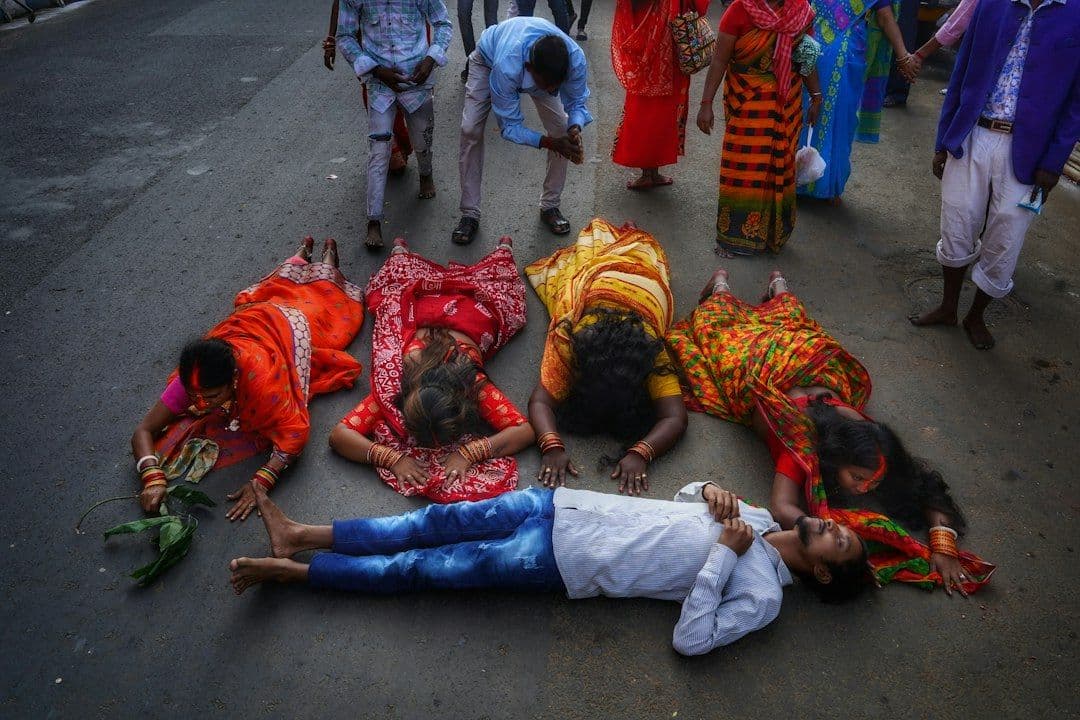
• UN condemnation amplifies domestic dissent: The Al Jazeera report (21 Oct 2026) that UN experts labeled India’s crackdown as “excessive force” has already ignited a wave of solidarity protests across metros, raising the stakes for the ruling coalition ahead of the 2026 state elections.
• Five systemic risks identified: Legal challenges to police powers, a surge in civil‑society mobilisation, heightened foreign diplomatic pressure, fiscal strain on state budgets, and the possibility of a coordinated opposition coalition could together destabilise the federal government.
• Policy window for reform: The international spotlight creates a narrow window for the Ministry of Home Affairs to recalibrate crowd‑control protocols, strengthen judicial oversight, and engage with youth‑led movements before the crisis deepens.
---
India’s democratic trajectory has long been punctuated by mass movements—from the anti‑Emergency protests of 1977 to the 2019–2020 farmer agitations. Each episode tested the state’s tolerance for dissent and, in turn, reshaped legislative safeguards. The current wave of unrest stems from three intersecting issues: the controversial Citizenship Amendment Act (CAA) extensions, rising tuition fees in private universities, and a series of environmental sit‑ins against new mining licences in the mineral‑rich states of Jharkhand and Odisha.
On 21 October 2026, Al Jazeera relayed a joint statement from five UN human‑rights experts urging the Indian government to cease “excessive force” against demonstrators. The statement cited recent incidents in Delhi’s Jantar Mantar, where live‑round ammunition was reportedly used, and in Kolkata, where water‑cannon attacks resulted in dozens of injuries. The experts warned that continued violations could breach India’s obligations under the International Covenant on Civil and Political Rights (ICCPR).
India’s national elections are slated for early 2027, but a series of state assembly polls—Uttar Pradesh, Maharashtra, and West Bengal—are scheduled for mid‑2026. The ruling Bharatiya Janata Party (BJP) relies on a coalition of regional allies that are already uneasy about the central government’s hard‑line approach. Simultaneously, the opposition Indian National Congress (INC) and a coalition of regional parties have begun drafting a joint manifesto that foregrounds “police accountability” and “civil liberties.” The UN’s condemnation arrives at a moment when public sentiment, especially among millennials and Gen‑Z voters, is increasingly sensitive to perceived authoritarianism.
According to the Ministry of Finance’s 2025‑26 budget, the central police budget stands at ₹1.8 trillion (≈ US$21.5 billion). An estimated ₹120 billion (≈ US$1.4 billion) has already been earmarked for “special operations” in the past twelve months, including procurement of crowd‑control gear and the expansion of the National Investigation Agency’s (NIA) rapid‑response units. If protests intensify and the state incurs additional medical and compensation costs, the fiscal burden could spill over into the already strained state coffers, especially in poorer regions that depend heavily on central grants.
---
The UN experts’ language—“excessive force”—has already been cited in petitions filed at the Supreme Court of India (SC). Two high‑profile writ petitions, filed by the Lawyers’ Collective and the Centre for Law and Governance, argue that the recent use of live ammunition violates Articles 21 and 22 of the Indian Constitution (right to life and personal liberty). If the SC issues a landmark ruling curbing police powers, it could force the Home Ministry to amend the Criminal Procedure Code (CrPC) and the Unlawful Activities (Prevention) Act (UAPA). Such legal recalibration, while essential for democratic health, could be perceived by the ruling party as a concession to “foreign pressure,” fueling nationalist rhetoric and deepening political polarization.
Millennial and Gen‑Z activists, already adept at leveraging platforms like Instagram Reels, X (formerly Twitter), and regional language TikTok alternatives, have begun organizing “Digital Dawn” campaigns. These initiatives map police deployments in real time, crowd‑source legal aid, and amplify testimonies of victims. The UN’s statement has been retweeted over 2 million times within 24 hours, turning a diplomatic censure into a viral rallying point. The risk is that sustained digital mobilisation could translate into coordinated street actions across at least 15 major cities, overwhelming local law‑enforcement capacities and creating a feedback loop of protest‑police confrontation.
Following the Al Jazeera report, the European Union’s High Representative for Foreign Affairs issued a “concern note” urging India to align its law‑enforcement practices with international human‑rights standards. Several multinational corporations—particularly in the renewable‑energy sector—have signalled a review of their Indian joint‑venture pipelines, citing ESG (environmental, social, governance) compliance. A Bloomberg estimate suggests that a 1 % dip in foreign direct investment (FDI) due to reputational risk could shave off roughly ₹200 billion (≈ US$2.4 billion) from the 2026‑27 fiscal inflows.
States such as Tamil Nadu and Karnataka have already allocated emergency funds—₹15 billion each—to cover medical expenses for injured protesters and to compensate families of those who died in police encounters. If the pattern repeats across ten high‑conflict states, the cumulative fiscal outlay could exceed ₹150 billion (≈ US$1.8 billion). This would force state governments to re‑prioritise development projects, potentially delaying infrastructure initiatives like the Delhi‑Mumbai Industrial Corridor (DMIC) and the Smart Cities Mission. The resulting slowdown could erode public confidence in the ruling coalition’s governance record.
The confluence of legal, social, and economic pressures creates fertile ground for a “grand coalition” of opposition parties. The INC, Aam Aadmi Party (AAP), and regional outfits such as the Trinamool Congress (TMC) have already signed a “Charter of Democratic Resilience” that includes a clause to demand an independent parliamentary committee on police reform. Should the UN’s condemnation galvanise public opinion, the opposition could leverage the issue to secure a common agenda, thereby threatening the BJP’s parliamentary majority in the Lok Sabha. A loss of even 15 seats would compel the government to negotiate with dissenting regional parties, potentially destabilising the current power balance.
---
• Information Technology (IT) and BPO: Youth protests in Bengaluru and Hyderabad have already caused a 12 % drop in daily attendance at major campuses, prompting firms like Infosys and Wipro to issue “business‑continuity advisories.”
• Manufacturing and logistics: Blockades at key railway junctions in Maharashtra have delayed freight movement, raising container‑shipping rates by an estimated 4 % (≈ ₹2,500 per TEU).
• Retail and consumer services: The “Buy Indian” campaign, championed by the Ministry of Commerce, faces backlash as protestors boycott stores that are perceived to support police actions, leading to a projected ₹30 billion (≈ US$360 million) dip in quarterly sales for major mall operators.
Medical NGOs have reported a surge in trauma cases related to crowd‑control weapons—tear‑gas inhalation, rubber‑bullet injuries, and, in rare instances, live‑fire wounds. The National Health Authority estimates an additional ₹8 billion (≈ US$96 million) in acute care costs for the next fiscal year. Moreover, mental‑health helplines have logged a 35 % increase in calls from protest‑affected families, indicating a long‑term psychosocial toll.
The “India protest excessive force” narrative is rapidly becoming a trending search term on Google India, with a 220 % spike in the past week. Traditional media houses are grappling with editorial independence, as some have faced pressure to downplay the UN’s statements. Meanwhile, independent digital newsrooms—such as The Wire and Scroll—have seen a 48 % rise in subscriptions, reflecting a growing appetite for uncensored reporting among the younger demographic.
• Legislative oversight: Creation of a Parliamentary Committee on Police Conduct, modeled after the UK’s Independent Office for Police Conduct (IOPC).
• Technological safeguards: Deployment of body‑camera mandates for all uniformed officers, with data stored on encrypted government cloud servers compliant with the Personal Data Protection Bill (2023).
• Community policing pilots: Expansion of the “Neighbourhood Policing” scheme in Delhi and Pune, allocating ₹2 billion (≈ US$24 million) for training officers in de‑escalation techniques and human‑rights law.
---
The UN panel referenced three high‑profile cases: (1) the deployment of live ammunition during a sit‑in at Delhi’s Jantar Mantar on 12 Oct 2026, which resulted in three civilian fatalities; (2) the use of water‑cannon blasts in Kolkata’s College Street protest on 15 Oct 2026, injuring over 40 students; and (3) the nighttime baton‑charge in Hyderabad’s Charminar market on 18 Oct 2026, which left 27 people with serious injuries. These incidents were documented by independent journalists, hospital records, and eyewitness video footage that circulated widely on social media.
State elections are highly sensitive to public sentiment on law‑order issues. If the narrative of excessive force persists, opposition parties can weaponise it to accuse the ruling coalition of authoritarianism, potentially swinging swing constituencies—especially among urban middle‑class voters aged 25‑40. Pollsters from CSDS (Centre for the Study of Developing Societies) have already noted a 7 % dip in BJP’s approval rating in Uttar Pradesh following the UN statement, a trend that could translate into seat losses if replicated in other key states.
Yes. Citizens can file writ petitions under Article 226 of the Constitution in High Courts, or under Article 32 directly in the Supreme Court, alleging violations of fundamental rights. Additionally, the National Human Rights Commission (NHRC) can be approached for inquiries, and the newly‑enacted Police (Reform) Act, 2025, provides for an internal grievance redressal mechanism. However, the effectiveness of these avenues depends on judicial willingness to interpret “excessive force” in line with international standards—a matter now under heightened scrutiny due to the UN experts’ remarks.
While full economic sanctions are unlikely given India’s strategic importance, targeted measures—such as travel bans on senior police officials or restrictions on defense‑export contracts—are plausible. The United States and European Union have previously employed “human‑rights‑linked” licensing conditions for dual‑use technology sales. If the pattern of excessive force continues, a “conditionality” clause could be attached to future trade agreements, affecting sectors worth up to ₹500 billion (≈ US$6 billion) in annual exports.
---
The UN experts’ warning that India is employing “excessive force” against demonstrators is more than a diplomatic rebuke; it is a catalyst that could accelerate a multi‑dimensional political crisis in 2026. The five pathways—legal erosion, youth mobilisation, international pressure, fiscal strain, and a unified opposition—intersect in ways that threaten the stability of the current government.
For policymakers, the immediate imperative is to demonstrate a credible commitment to reform: revising crowd‑control protocols, enhancing judicial oversight, and engaging transparently with civil‑society groups. Failure to act could deepen public distrust, erode economic confidence, and empower a coalition of opposition forces poised to challenge the BJP’s dominance in the forthcoming state polls and the 2027 national election.
Conversely, a measured response that balances security concerns with human‑rights obligations could restore confidence among millennials and Gen‑Z voters, preserve foreign investment, and reaffirm India’s democratic credentials on the world stage. The next six months will be decisive; the trajectory of “India protest excessive force” will likely define the nation’s political landscape for years to come.
This article has been independently verified by the Vrifide editorial team. The source data and confidence assessment are provided below for full transparency.
Confidence Score
83%
No comments yet. Be the first to share your thoughts!


